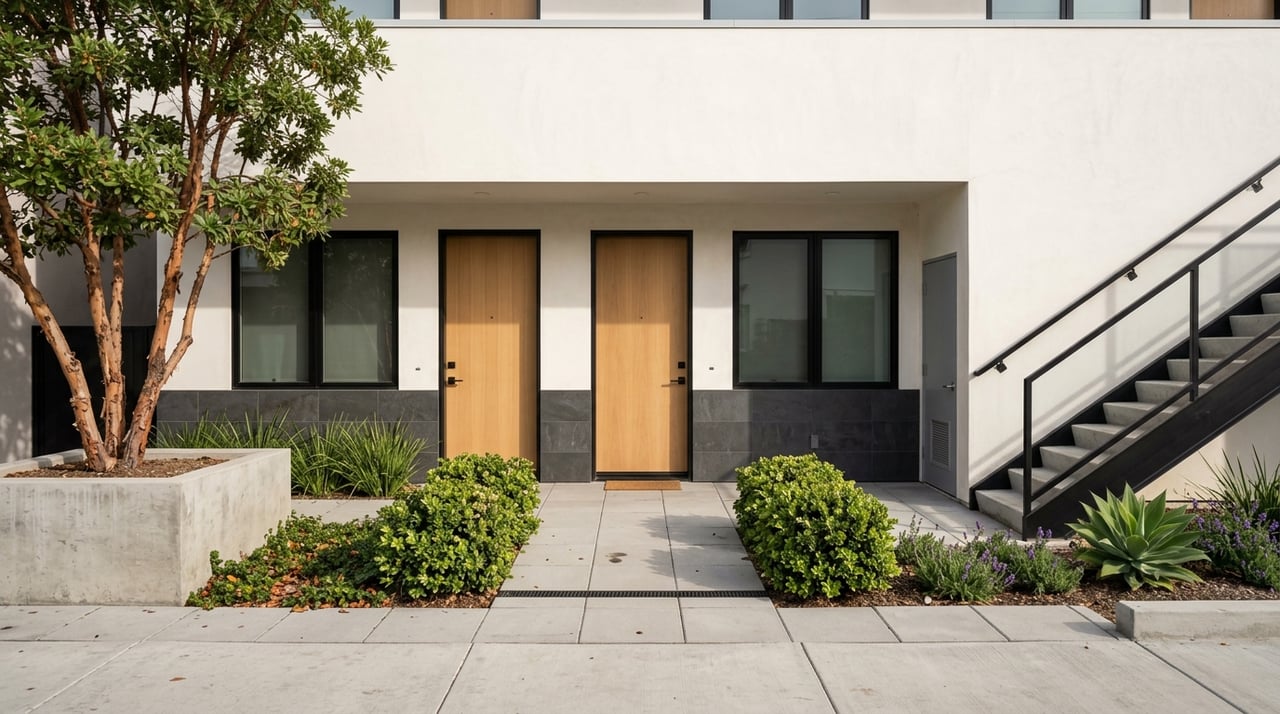
If you have been looking at small investment properties in San Carlos, you have probably noticed the same thing many buyers do: the numbers are not as simple as they look in other markets. Prices are high, supply is tight, and quick cash flow is rarely the whole story. The good news is that with the right strategy, a duplex, triplex, or ADU-ready property can still make sense here. Let’s dive in.
Why San Carlos requires a different strategy
San Carlos is a built-out Peninsula city with very little vacant land left. According to the city’s Housing Element, most future housing opportunities are tied to redevelopment and mixed-use corridors near El Camino Real, San Carlos Avenue, and the Caltrain station rather than large amounts of open land.
That matters because scarcity shapes both pricing and investor strategy. As of March 2026, Redfin reported a median sale price of $2.75 million in San Carlos, with homes moving in about 11 days and averaging around 6 offers. Zillow’s San Carlos rental data showed an average rent of $4,040 as of May 15, 2026, which points to a simple gross annual rent yield of about 1.76% before expenses and financing.
In plain terms, this is usually not a market for easy, immediate cash flow. In San Carlos, small investment properties often work better as long-term holds built around appreciation, careful improvements, and legal ways to increase income over time.
What counts as a small investment property
For most buyers in San Carlos, a small investment property means existing housing stock, not a big development play. City planning materials describe multifamily housing here as including duplexes, triplexes, fourplexes, townhomes, condominiums, and apartment buildings.
For a practical investor, the most common targets are duplexes, triplexes, and smaller multifamily properties with some kind of upside. That upside may come from better management, a light rehab, or the addition of an accessory dwelling unit, also called an ADU.
The city’s Housing Element reinforces why this matters. Most sites already have existing uses, and the city identified underutilized mixed-use parcels as part of future housing capacity. That tells you supply is constrained, and properties with built-in potential tend to attract more attention.
Start with conservative underwriting
In San Carlos, conservative underwriting is not optional. It is one of the best ways to protect yourself in a market where the purchase price is high and the margin for error is smaller.
A solid underwriting model should separate these items clearly:
- Gross scheduled rent
- Vacancy and credit loss
- Operating expenses
- Repair and replacement reserves
- Debt service
The biggest stress test is usually not whether a unit will rent. It is whether the property still makes sense if repairs cost more than expected, if tenant turnover takes longer, or if rent growth is slower than you hoped.
Know how rent rules affect your projections
California’s Tenant Protection Act is an important part of the math for many San Carlos investors. The law generally caps annual rent increases at the lower of 5% plus CPI or 10% in any 12-month period, and it gives most tenants just-cause protections after 12 months.
That means you should not build your financial plan around aggressive annual rent jumps for occupied units. Instead, your projections should reflect the property’s actual legal status and the likely timing of tenant turnover.
Exemptions matter too. Based on guidance from the California Attorney General, the law does not cover certain properties, including some single-family homes not owned or controlled by a corporation or REIT, owner-occupied duplexes while the owner continues to live there, and units with a certificate of occupancy from the last 15 years.
This is why blanket assumptions can get investors in trouble. Before you buy, you want to understand exactly which rules apply to that specific property, not just what applies “in general.”
Turnover matters more than many buyers think
One of the clearest takeaways for San Carlos investors is that turnover timing can matter more than annual rent bumps. The California Attorney General notes that when a tenant leaves and a new tenancy begins, the owner may set the initial rent for that new tenancy, even though ongoing tenancies remain subject to limits.
That makes acquisition basis, current unit condition, and tenant profile especially important. A property with below-market rents is not automatically a bad investment, but you need a realistic timeline for how and when those rents might change.
This is also where unit quality matters. If kitchens, baths, flooring, and building systems are dated, future turnover may create an opportunity to improve rentability, but only if you budget carefully and understand the likely return on those updates.
ADUs are one of the strongest value-add tools
In San Carlos, ADUs are often the most practical value-add strategy for a small investor. They offer a way to add legal living space and potential income in a city where land is limited and demand remains strong.
The San Mateo County ADU Resource Center says ADUs are allowed in RS, RM, and MU districts in San Carlos. It also lists size standards of up to 850 square feet for ADUs with one bedroom or less, up to 1,000 square feet for ADUs with two or more bedrooms, and up to 500 square feet for JADUs.
Setbacks can also make smaller projects more feasible. For first-floor attached or detached ADUs, side and rear setbacks are listed at 4 feet. In many common situations, parking may also be waived, including when the ADU is within a half-mile walking distance of public transit or created from a garage conversion.
Another important point for investors: short-term rentals are not allowed for ADUs under the local rules summarized by the county resource center. So if you are modeling income, it should be based on long-term occupancy rather than vacation-rental assumptions.
Why ADUs are often more predictable
State housing guidance adds another reason investors pay close attention to ADUs. The California Department of Housing and Community Development says ADU applications in residential and mixed-use zones are approved ministerially when they meet objective standards.
That does not mean every project is easy. It does mean the process is often more rule-based and less discretionary than many buyers expect. For investors, that can reduce one layer of uncertainty.
State guidance also notes that multifamily lots can qualify for up to eight detached ADUs, as long as the number does not exceed the number of existing units on the lot. Depending on the property, that can make a small multifamily asset much more interesting over a longer holding period.
San Carlos itself appears to view ADUs as a meaningful part of the housing supply. The city’s Housing Element projects 203 ADU units during the 2023 through 2031 planning period, which suggests this is a real strategy in local housing planning, not just a niche idea.
Light rehab can still move the numbers
Not every value-add plan needs to involve major construction. In San Carlos, light rehabs can be a smart strategy because small improvements may have an outsized effect in a supply-constrained market.
The strongest updates are often the practical ones buyers and renters notice right away:
- Kitchen updates
- Bathroom refreshes
- New flooring
- Interior paint
- System improvements
- Landscaping cleanup
- Safety and compliance work
These projects usually work best when they improve livability and reduce future maintenance rather than chase luxury finishes for their own sake. In a high-cost market, disciplined spending matters just as much as the upgrade itself.
A practical San Carlos strategy checklist
If you are evaluating a duplex, triplex, or small multifamily property in San Carlos, focus on the questions that drive long-term performance:
- What is the current legal unit mix?
- Which rent rules apply to this property?
- What are the current rents versus likely market rents?
- How much deferred maintenance is there?
- Is there realistic ADU or JADU potential?
- Are parking and setback rules supportive of that plan?
- What is your hold period?
- Does the deal still work with conservative expense assumptions?
This kind of checklist helps you move past the headline price and toward the real investment story. In San Carlos, that story is often about patience, compliance, and smart execution.
Overseas buyers should plan for tax help early
For overseas buyers, one extra layer of planning is tax compliance. The IRS states that FIRPTA withholding generally applies when a foreign person disposes of a U.S. real property interest, and buyers are generally the withholding agents. The standard withholding rate is 15% unless an exception applies.
This does not mean foreign buyers should avoid San Carlos. It does mean that cross-border tax planning should be part of the acquisition conversation early, and it should also be part of your refinance and exit planning later.
For many international and out-of-area investors, the smartest move is to build a team before closing. A detail-forward real estate advisor, tax professional, and other needed specialists can help you avoid costly assumptions and make better decisions from day one.
What tends to work best in San Carlos
The most durable small investment property strategies in San Carlos usually share a few traits. They are underwritten conservatively, they do not rely on unrealistic rent growth, and they treat ADU potential as a serious part of the return model when the property supports it.
Just as important, they are built around the realities of this market. San Carlos rewards buyers who understand limited supply, plan for long-term value, and stay disciplined about property condition, legal status, and future flexibility.
If you want help evaluating a duplex, triplex, or ADU opportunity in San Carlos, Vision Real Estate can help you think through the numbers, the property strategy, and the local trade-offs with a practical, detail-driven approach.
FAQs
What makes San Carlos different for small investment properties?
- San Carlos is a built-out market with limited vacant land, high home prices, and relatively tight rental yield, so many investors focus on long-term appreciation, value-add improvements, and ADU potential rather than quick cash flow.
What types of properties count as small investment properties in San Carlos?
- In San Carlos, small investment properties commonly include duplexes, triplexes, fourplexes, townhomes, condominiums, and other small multifamily properties, with most buyers focusing on existing housing stock rather than raw land.
How should you underwrite a duplex or triplex in San Carlos?
- You should separate rent, vacancy, operating costs, reserves, and debt service, then stress test the deal for slower rent growth, higher repairs, and longer tenant stays.
How do California rent rules affect San Carlos investors?
- Many properties are affected by California’s Tenant Protection Act, which generally limits annual rent increases and adds just-cause protections, so investors need to verify whether a property is covered or exempt before relying on future rent growth.
Why are ADUs important for San Carlos investment strategy?
- ADUs can create additional legal living space and income potential in a market with limited land, and local and state rules make them one of the clearest value-add paths for many San Carlos properties.
What should overseas buyers know before buying San Carlos investment property?
- Overseas buyers should plan for professional tax guidance early because FIRPTA withholding and other cross-border tax considerations can affect both the purchase structure and the eventual sale.