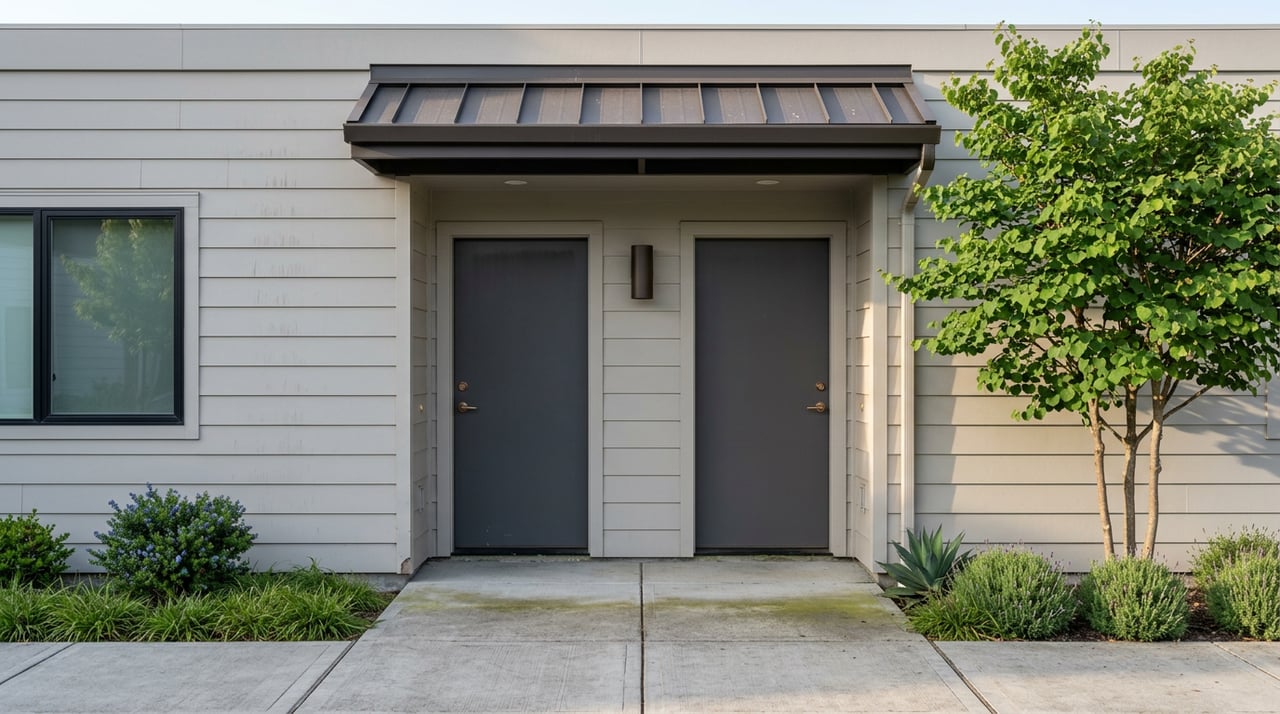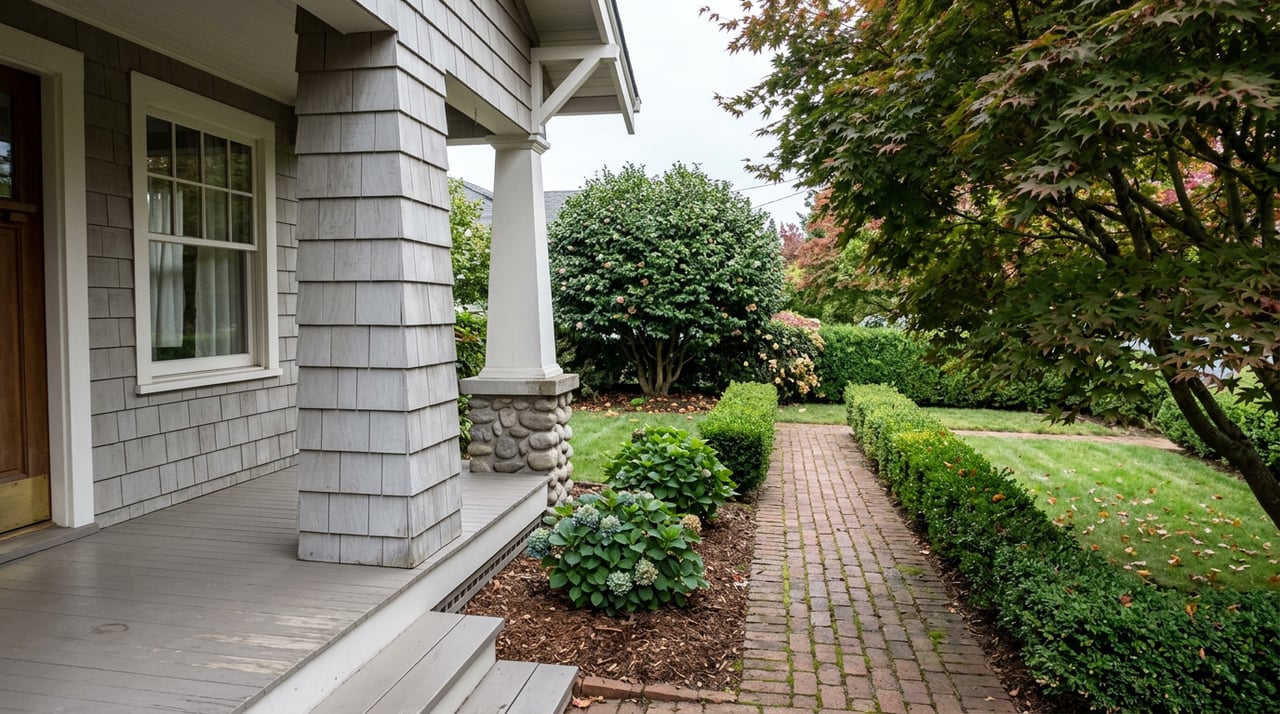
A listing agent walks a buyer through a 1920s bungalow near Stambaugh-Heller and mentions, almost in passing, that the house "could qualify for Mills Act." It sounds like an upside. A discount on property taxes for owning something old and worth preserving. Until March 9, 2026, that pitch was at least true in theory. It no longer is, and the gap between what agents are still saying and what the city will actually let you do is exactly where a buyer or seller of an older Redwood City home can get burned.
What actually happened on March 9
The Redwood City Council voted 6-1 to immediately suspend intake of new Mills Act contract applications while staff and the Historic Resources Advisory Committee rework the city's Historic Preservation Ordinance. Councilmember Isabella Chu, explaining her vote, put it plainly:
"I don't necessarily think that that set of conditions holds true in Silicon Valley in the year 2026."
The freeze is not a formality. Staff are studying real changes to the program, including requiring active rehabilitation work during the first ten years, setting property value caps for eligibility, and mandating inspections more frequent than the state's five-year minimum. A report is due back to the council by December 2027, and the earliest a new applicant could reasonably expect to file is June 2028. As of this writing in August 2026, that is nearly five months into a freeze that could easily run past two years.
Here is the detail that changes how you should read every "Mills Act eligible" line in a Redwood City listing right now: the city confirmed that four homeowners had already expressed interest in applying for 2026 and were turned away. The door did not close slowly. It closed on people who were standing in it.
Existing contracts didn't just survive. They got more valuable.
Redwood City adopted its Mills Act program in 1990, and 41 contracts have been approved since then. Those 41 properties keep their tax abatement, typically 40 to 60 percent off the assessed value, and the contract transfers with the title when the home sells. Senior planner Ryan Kuching was direct about this when he presented the pause to the council, stating that staff were not recommending any changes to the status of the city's 41 contracts and that all existing agreements would be honored.
That single fact is the thesis of this whole freeze. A Mills Act contract used to be a benefit any owner of a qualifying historic home could eventually apply for. Now it is a fixed inventory of 41 properties, full stop, with no mechanism to add a 42nd until at least mid-2028 and possibly later. If you are buying one of those 41 homes, you are buying a locked-in tax position that cannot be replicated anywhere else in the city right now. If you are buying a similar-looking historic home without a contract, you are buying a house that merely resembles one, with none of the benefit and no path to get it.
The clearest illustration is 1052 Edgewood Road, a 4,000-square-foot single-story now valued at more than $5 million. Under its Mills Act contract, the property has saved nearly $340,000 in taxes since 2014, according to city records and contracts reviewed by Redwood City Pulse. That is not a hypothetical discount. It is roughly $30,000 a year that a new owner would keep receiving simply by taking title, for as long as the contract's obligations are met.
Two houses, same block, different math
Picture two comparable historic homes in the same Redwood City neighborhood, one with an active Mills Act contract and one without.
| Home with an active Mills Act contract | Comparable historic home, no contract | |
|---|---|---|
| Property tax basis | Reduced 40-60% under the existing contract, transfers with title | Full assessed value, no discount available |
| Can a new owner apply for Mills Act? | Not applicable, contract already in place | No, applications are paused with no confirmed reopening date before mid-2028 |
| Holding cost certainty | Locked in for the contract term, renews annually | Full market tax exposure, no offsetting program |
| Resale positioning | Contract is a documented, transferable asset | "Historic character" without a tax benefit to back it up |
That right-hand column is where a lot of Redwood City listing language currently overstates the case. A house being old, or even being formally recognized in the city's historic inventory, is not the same as a house carrying a contract. Only the left column has one.
What this means if you're negotiating right now
If you are looking at a historic property that already has a Mills Act contract, verify it exists before you factor the tax savings into your offer. Contracts transfer with title, so this should show up on your preliminary title report, and the listing agent should be able to produce a copy of the recorded contract along with the work program schedule the seller agreed to maintain. Ask for both.
A few things worth checking before you assume you're buying into an active contract:
- Request the recorded Mills Act contract and its work program directly from the seller or listing agent, not just a verbal confirmation.
- Confirm on your preliminary title report that the contract is listed as an encumbrance that runs with the land.
- Check whether the required maintenance and improvement schedule has actually been followed. Enforcement has been a documented weak point, since interior inspections on the city's five-year review cycle were not determined necessary in the most recent round, according to reporting on the March council session.
- Ask what happens to the tax basis if the new owner does not want to continue certain improvement obligations. The contract binds the property, not just the seller.
If you're touring a home that is old, characterful, and simply not on the list of 41, treat any "Mills Act eligible" language as aspirational at best. Christopher Ver Planck of Ver Planck Historic Preservation Consulting, who evaluates historic designations across the region, has noted that only about 10 percent of the properties he reviews actually meet the bar for historic designation, and that the program was never meant to subsidize buyers of expensive real estate rather than owners genuinely restoring older housing stock. That distinction matters more now that new applications aren't being accepted at all.
One more thing worth knowing if you're dealing with any pre-1960s Redwood City home, contract or not. You may have read that the city requires a sewer lateral inspection before a sale can close. It doesn't. That point-of-sale requirement exists in San Mateo, Burlingame, and San Bruno, but Redwood City has no equivalent mandate on its books. Given the age of the pipes in neighborhoods like Stambaugh-Heller and Mount Carmel, a pre-listing camera scope is still a smart move. It just isn't a legal requirement here, and conflating the two ordinances is an easy way to misstate what a Redwood City closing actually involves.
What sellers with an existing contract should do differently
If your home is one of the 41, the freeze just handed you leverage you didn't have in February. Buyers can no longer assume they'll simply apply for the same benefit after closing on any old house they like. That makes your contract a documented, non-replicable asset rather than a nice-to-have footnote in the listing description.
- Have the recorded contract and current work program ready for buyer due diligence before you go to market.
- Frame the tax history as a hard number, not a vague mention of "historic tax benefits." A figure like the actual annual savings, drawn from your own property tax records, does more for a buyer's confidence than the word "eligible" ever will.
- Expect more scrutiny on maintenance compliance. The council's own review flagged inconsistent inspection follow-through as a reason for the pause, so a buyer's agent doing their homework may ask harder questions than they would have a year ago.
FAQ
Does a Mills Act contract end when the house is sold? No. The contract runs with the property and transfers to the new owner at closing, along with its remaining obligations under the work program.
Can I apply for a new Mills Act contract on a historic home in Redwood City right now? No. The city suspended intake of new applications on March 9, 2026, with a staff review targeted for December 2027 and a possible reopening for new applicants as early as June 2028.
If my home is in the city's historic inventory but doesn't have a Mills Act contract, is there any workaround? Not currently. Being listed as historically significant is a separate designation from holding an active contract, and there is no mechanism right now to convert one into the other.
Does Redwood City require a sewer lateral inspection before selling an older home? No. That point-of-sale requirement applies in neighboring San Mateo, Burlingame, and San Bruno, not Redwood City, though a pre-listing scope is still a reasonable precaution given the age of the pipes in the city's older neighborhoods.
The freeze on new Mills Act applications is a policy story, but it is quietly a pricing story too. It just split Redwood City's older housing stock into two markets that look the same from the curb and behave very differently on a closing statement. Knowing which one you're standing in front of is worth more than the listing description will tell you.
If you're weighing a purchase in Stambaugh-Heller, Mount Carmel, or any of Redwood City's older pockets and want a straight read on what a specific property's tax position actually looks like, Vision Real Estate can help you verify it before you write an offer. Get a Free Property Valuation and let's look at the numbers together.